


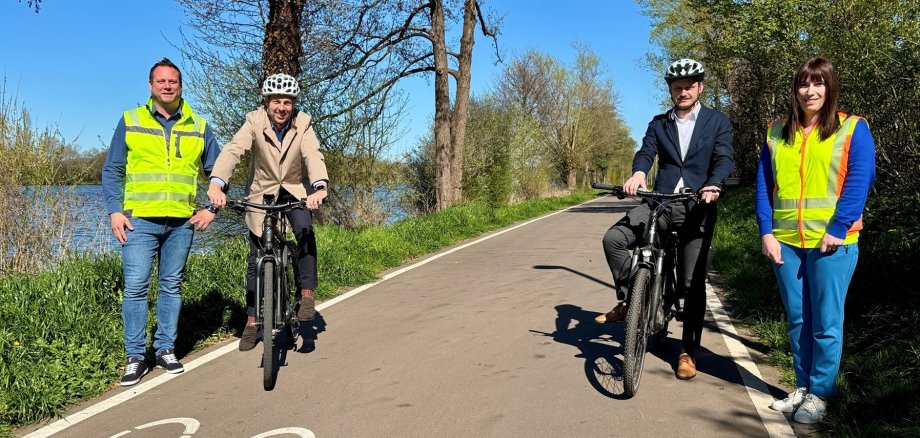
Commuter bike route in Konz completed
Get out of the car and onto your bike! "The commuter bike route in Konz is now officially open," says Mayor Guido Wacht. "The new route is intended to make cycling safer and more attractive for working commuters and everyday cyclists."
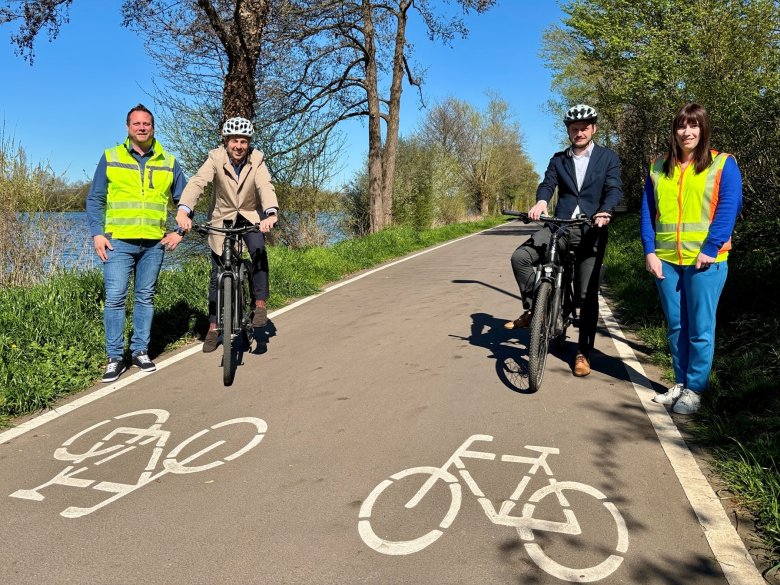
The bicycle-friendly route runs for approximately 5 kilometers within the city limits of Konz. Bicycle streets have been established along a 2.2-kilometer stretch. Additionally, the Moselle Cycle Path has been upgraded over a 1.3-kilometer section. On the remaining kilometers, markings have been adjusted accordingly. Final finishing touches to the markings will be completed in the coming weeks.
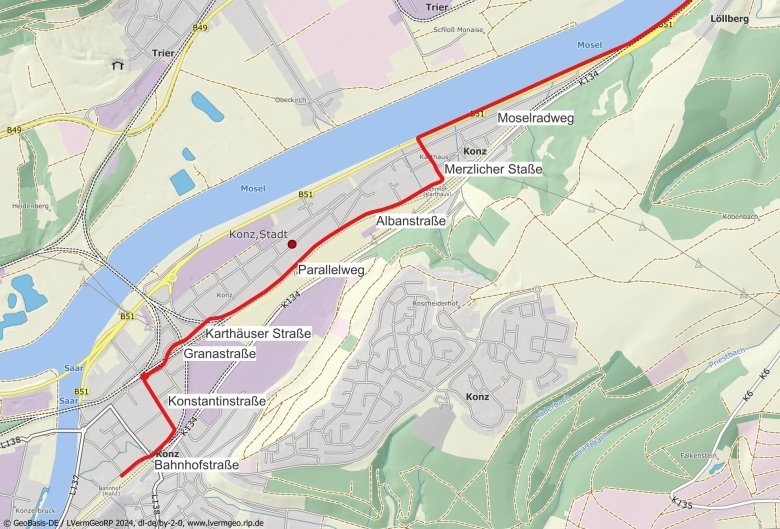
The commuter cycle route starts at Konz train station and initially follows Bahnhofstraße, Konstantinstraße, and a short stretch along Granastraße and Karthäuser Straße. It then continues along Parallelweg and Albanstraße. Beyond the monastery, it follows Merzlicher Straße to the Moselle cycle path.
The route of the commuter cycling route is shown in the following map:
“The goal was to use the route to reach as many people as possible within the city,” explains Mayor Guido Wacht. “At the same time, it should be a safe route for cyclists, but car traffic should not be too severely restricted.”
To ensure the success of all this, streets were chosen for the commuter cycle route that have few disruptive elements such as lane narrowing and are also, ideally, not main traffic routes. The parallel path and also parts of Konstantinstrasse and Bahnhofstrasse were designated as cycle streets, meaning that cyclists have priority over motorized traffic there.
The project, along with other cycling infrastructure projects, received a total of approximately €1.4 million in funding from the Federal Ministry for Digital and Economic Affairs. Once all sections are completed, the entire route will run from Konz via Trier to Schweich.
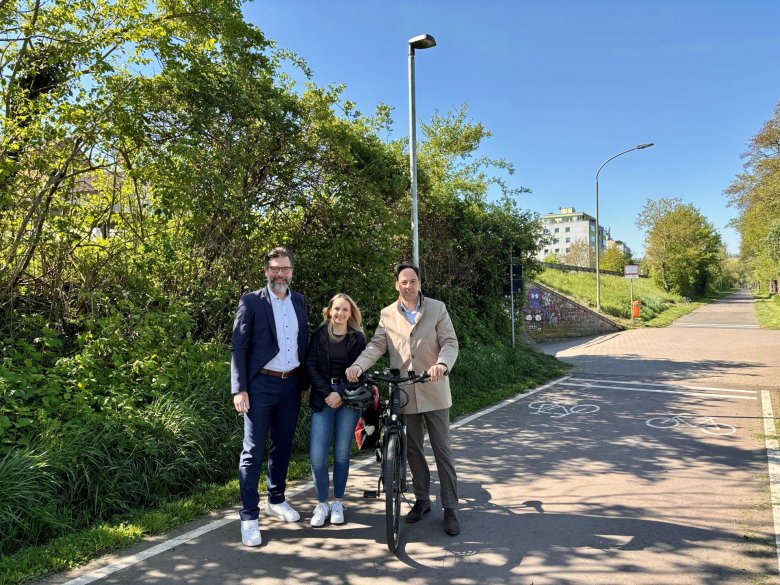
In addition to the implementation of the commuter cycling route, "smart lighting" has been installed on the Moselle Cycle Path in the Karthaus area. Unlike conventional continuous lighting, this system only activates the lights when cyclists or pedestrians are present in the corresponding section of the path. This reduces electricity consumption and light pollution. This measure is also subsidized by the federal government and supported by the network operator Westnetz with €50,000.